Comparing Halloweens

As usual on my social media feed at this time of year, there have been interesting discussions about Halloween, its roots, how it is understood in Finland, and whether or not it’s “demonic.”

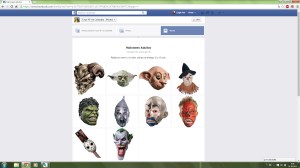
It got me thinking about my own research for my thesis on online cultural identity. I decided to to a quick survey of the online presence of Toys “R” Us stores in various countries and to what extent, if any, they market Halloween. I chose this method of comparison based on a couple of Facebook threads I’ve recently read noticing the difference between the marketing of Halloween in the US and Finland. Although this research was performed quickly on a Wednesday morning, by a researcher who was still in her pajamas and had tons of “more important” things to do, I assert that this study can shed light on key cultural differences and similarities as well as glocalization.

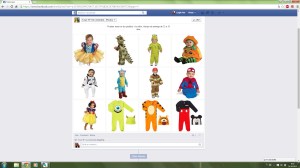
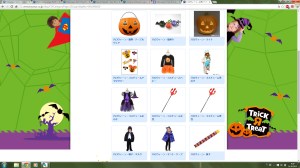
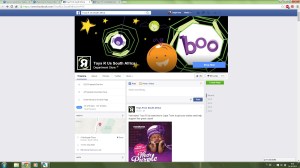
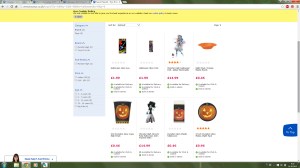
The countries I chose to include in this study were chosen pretty randomly, based on an image of a world map I had in my mind. They had to have a Toys “R” Us online presence that in some way featured Halloween. Below are some screenshots from the chosen websites, or Facebook pages, if there was no website. Note that the Finnish page is also representative of other Nordic countries, as they all belong to one “group.” Each screenshot is of the “most Halloween I could get in one shot” for each country’s online presence (with the exception of Colombia, for which I included two images because they were so different from each other). The US site, naturally, is so vast that only the category titles are visible in this shot, but I thought it was interesting that there were so many categories.
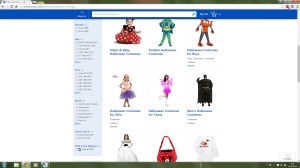
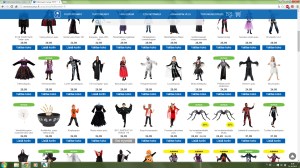
Without giving too much analysis (like I said, “more important” things to do), I would simply like to display these graphics and point out that there are vast differences in target ages, products (costumes vs. party supplies, etc.), and gore levels. Have a look and use your own cultural awareness to draw conclusions. I would be interested to know about them!
Culture Snapshot

I wish I had an actual photo of what I am about to describe. I was driving home after having dropped off the children at school one day last week, and I saw a man.

First, a little background about this man. He’s a bum. A real bum. I was pretty unfamiliar with bums before I came to Finland. (This is NOT to say that bums are more common in Finland, they just seem to be more a part of mainstream society.) Now, I had seen this particular bum the day before in the grocery store. Actually, I smelled him before I saw him. He ended up in the check-out line behind me. He was buying sausages, meat pastries, and beer. The cashier asked if he had the store’s bonus card. He drunkenly slurred that it was “in the car.” Ha.

Back to the school run. It was a warm morning. Already on our way to school, I had seen the man talking by the side of the road with two women, not far away from the grocery store I had seen him in. Now on my way home, I was coming up to the same spot, and I saw an ambulance stopped by the side of the road. Not only that, I saw two strong looking platinum blond female paramedics on either side of the man, escorting him to the ambulance while holding onto his arms and talking to him calmly. It is of this scene I wish I had an actual photo. It struck me as so Finnish – the bum, the blonds, everything.

A (not-so-rose-) Colored Culture

Sometimes one doesn’t see his or her own culture as “culture.”  Growing up, I associated this word  with the likes of “other” or “exotic.”  Moving abroad has forced me to view my native culture in a new light.  I have allowed for the possibility that what was normal to me growing up could also be seen as “other” or “exotic,” and I have found that it most definitely is, in its own way.

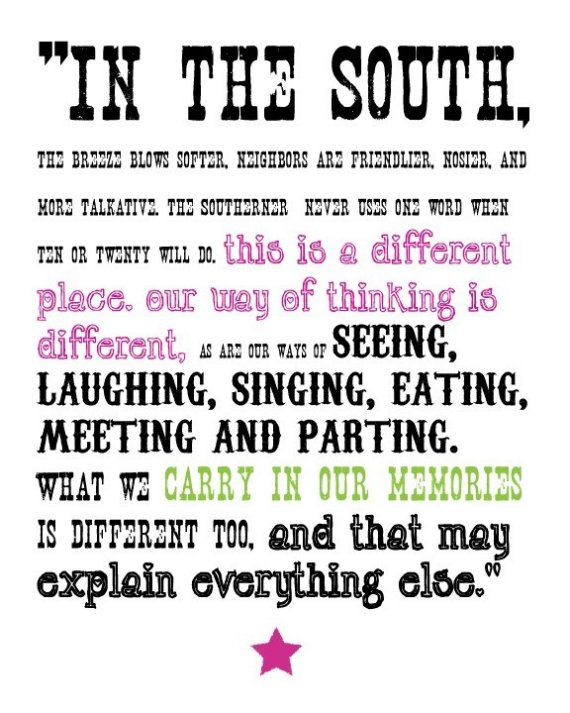
I have read many “You know you’re a Southerner if . . .”s and other blanket declarations describing a certain culture, one example being this print that can be found on Etsy:

the south

“In the South, the breeze blows softer, neighbors are friendlier, nicer, and more talkative.  The Southerner never uses one word when ten or twenty will do.  This is a different place.  Our way of thinking is different, as are our ways of seeing, laughing, singing, eating, meeting and parting.  What we carry in our memories is different too.  And that may explain everything else.”

Yes, it’s about pride in where one is from, but there is a good bit of truth in the last part here:  a society’s collective memory, including victories, embarrassments, offenses, and trauma, even from generations back, absolutely can affect that culture in the present, and therefore the way each person in that society sees the world.

Two examples of this come to mind.  One involves the issue of the Confederate Flag, a highly controversial symbol in my native state of South Carolina and the surrounding areas.  It is often interpreted to mean “hate” in regards to race or, seemingly less severe, but potentially just as harmful, “pride.”   In Finland, the Stars and Bars can primarily be found in rockabilly culture, associated with a certain type of music, clothing, hair, and cars.  The Confederate Flag is not weighted with much value in Finland.  I’ve been told the flag can be regarded only as fashion, or at most seen as a symbol meaning “rebel” or not going along with the mainstream, a sentiment also associated with it in the US.  Coming from the southern United States, I am always taken aback when seeing it in Finland, although, generally, it is not a taboo symbol here.  A fellow American who lived in Finland describes the scene in this blog post.

Another example pertains to one of my all-time favorite movies, The Sound of Music.  A couple of years ago, I was studying with a group of Austrian students.  As we were talking, I came to realize that almost none of them had ever seen the film.  How could a movie so popular not be well-known to people of my generation in western society this day in age?  To answer that question, I only needed to consider where they were from, and why this particular movie might not be prevalent there because of traumatic events in the not-so-distant past.  A BBC article sheds more light on the subject.

Both of these examples involve significant historical events, which color the lenses of how people perceive current aspects of culture.  They exemplify how memories and thinking habits are passed down through generations.  In today’s digital society, current western culture can sometimes feel homogeneous.  Generally speaking, we all listen to the same music and wear the same types of clothes.  We experience Game of Thrones together and give our input in an argument over the colors of a dress.  It becomes easy to forget the deeply rooted cultural memories that shape our perception of the world.  Do you have any examples of this to share?

Celebrating Culture

As Halloween approaches, I find myself deep in the world of devilish decor and frightening food. For me growing up, Halloween was an exciting celebration, which I greatly anticipated.  However, it was usually just a one-day event.

When I first came to live in Finland in 2002, traces of Halloween could be spotted here and there. I was able to carry on with my tradition as dressing in a costume at my workplace, an English kindergarten.  For the most part, though, Halloween was not really celebrated, at least not in the American sense.  (Finns have a tradition of putting candles on the graves of loved ones as part of All Saints’ Day and All Souls’ Day.)  Therefore, as has been the case with other minor holidays I was used to celebrating, I turned it into a major holiday in my household.

Halloween has become more and more popular in Finland since I first came here.  I have delved into the diy sector of the holiday, finding the tacky, cheaply made merchandise in the stores here unauthentic and distasteful.  I get the sense that stores are forcing the issue onto a public that does not feel it, perhaps not completely unlike the way US Americans have in recent years adopted cinco de mayo.

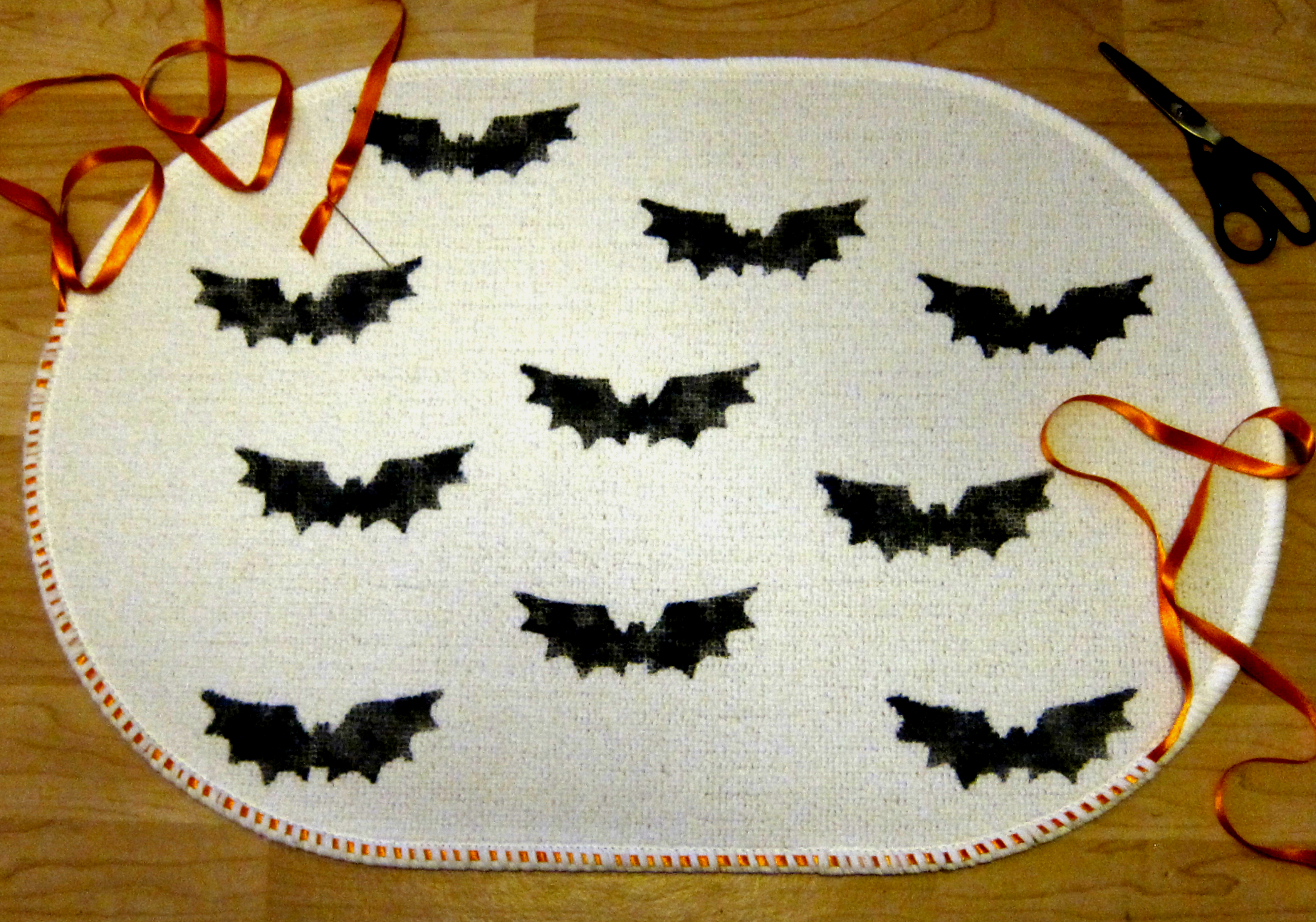
So, as I labor away at the orange satin trim on my almost finished bat mat, I recognize that I do so because I am trying to culturally identify myself.  I celebrate Halloween, and this is how I celebrate it.

How do you culturally identify yourself?  What things do you do, maybe even over-do, to distinguish yourself?  How do you relate to the culture around you: do you invite it into your personal space or actively keep it at bay?  Are you an importer of culture from another geographic location?  Whether we are surrounded by a culture that is our native one or have been transplanted into a culture we find different from our own, we all are constantly giving to and taking from culture, which shapes both us and the world in which we live.

batmat2